
Trekkie Parsons - Still Life
Trekkie Parsons - Still Life
3266
TREKKIE RITCHIE PARSONS
(1902-1995)
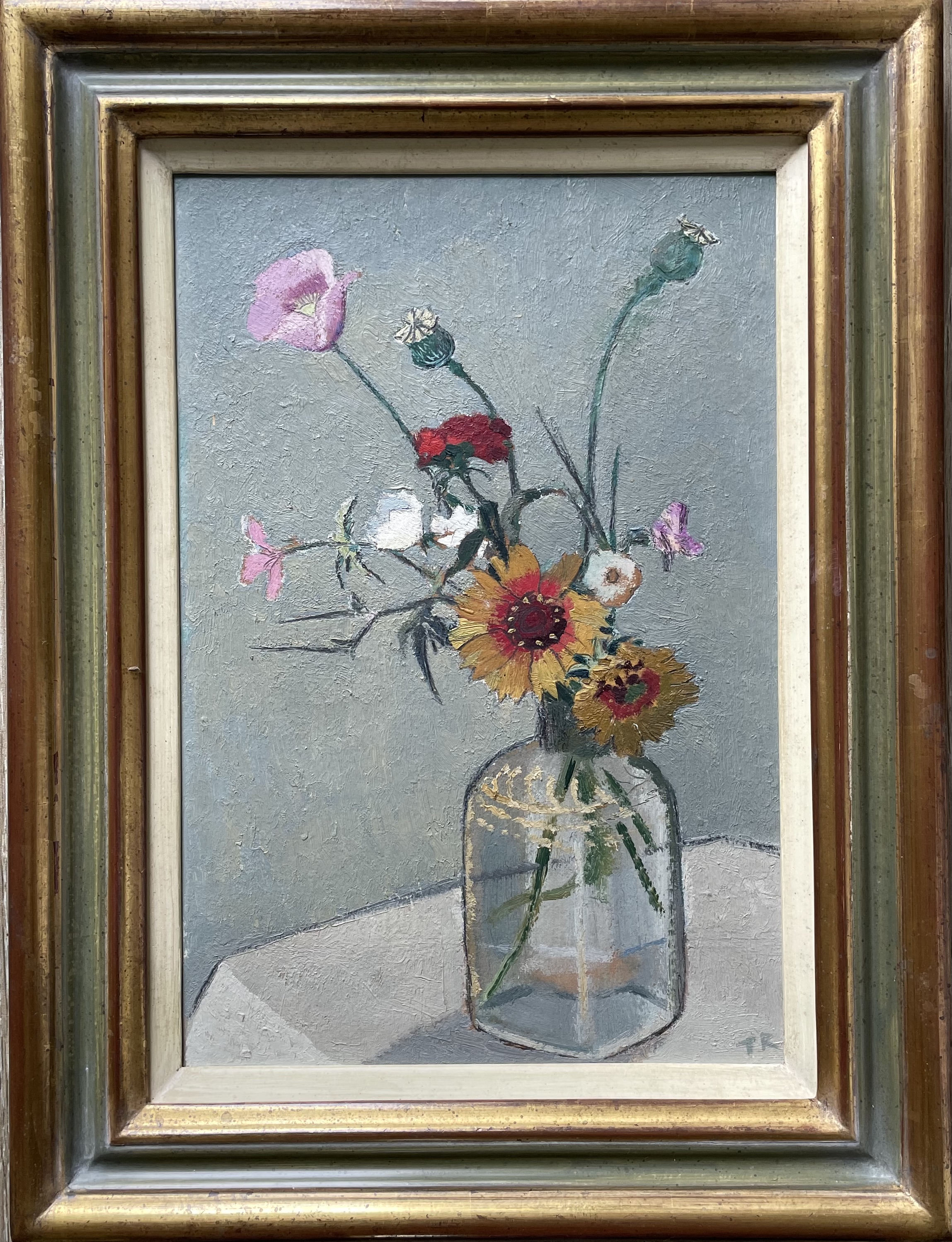
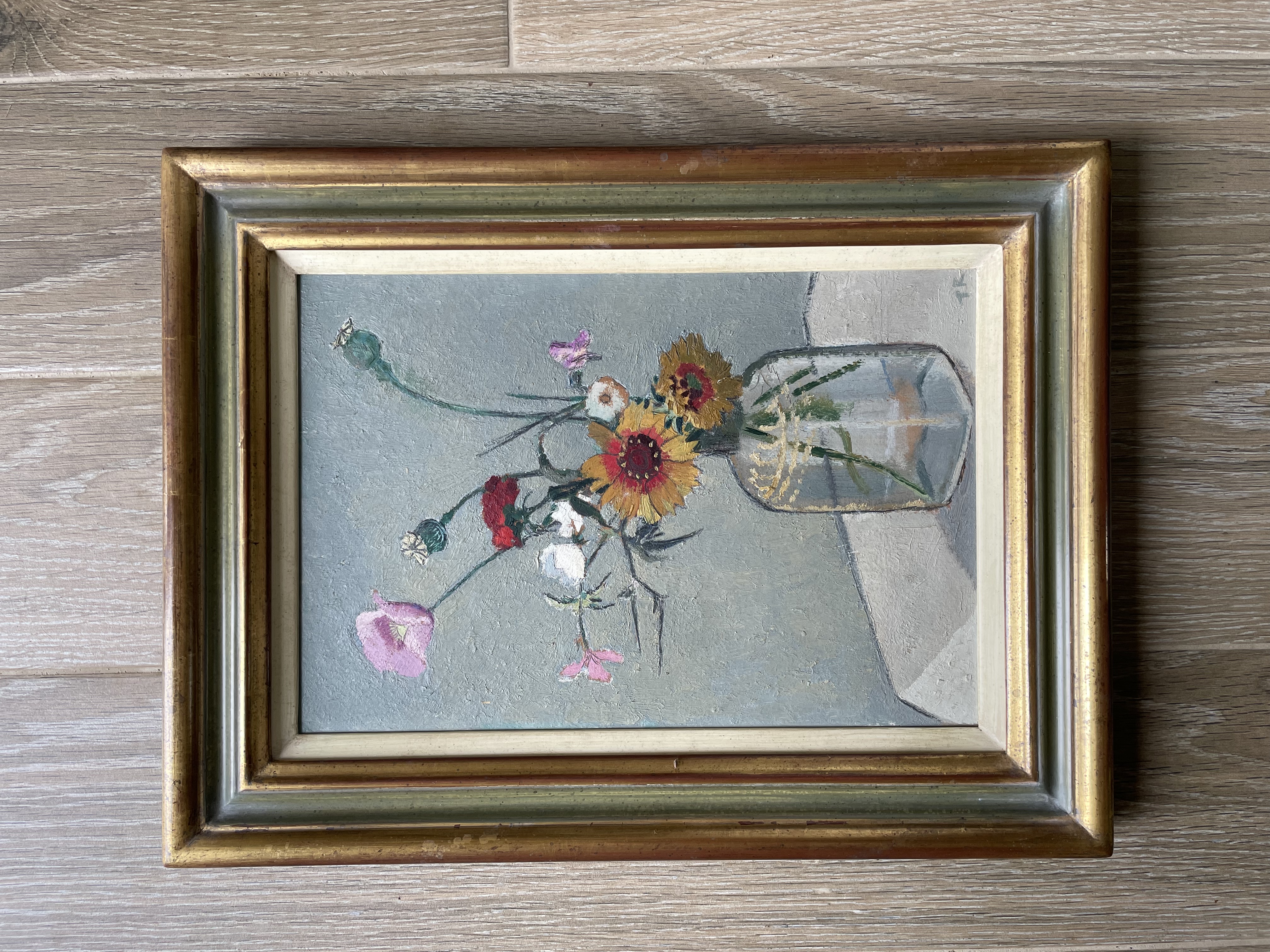
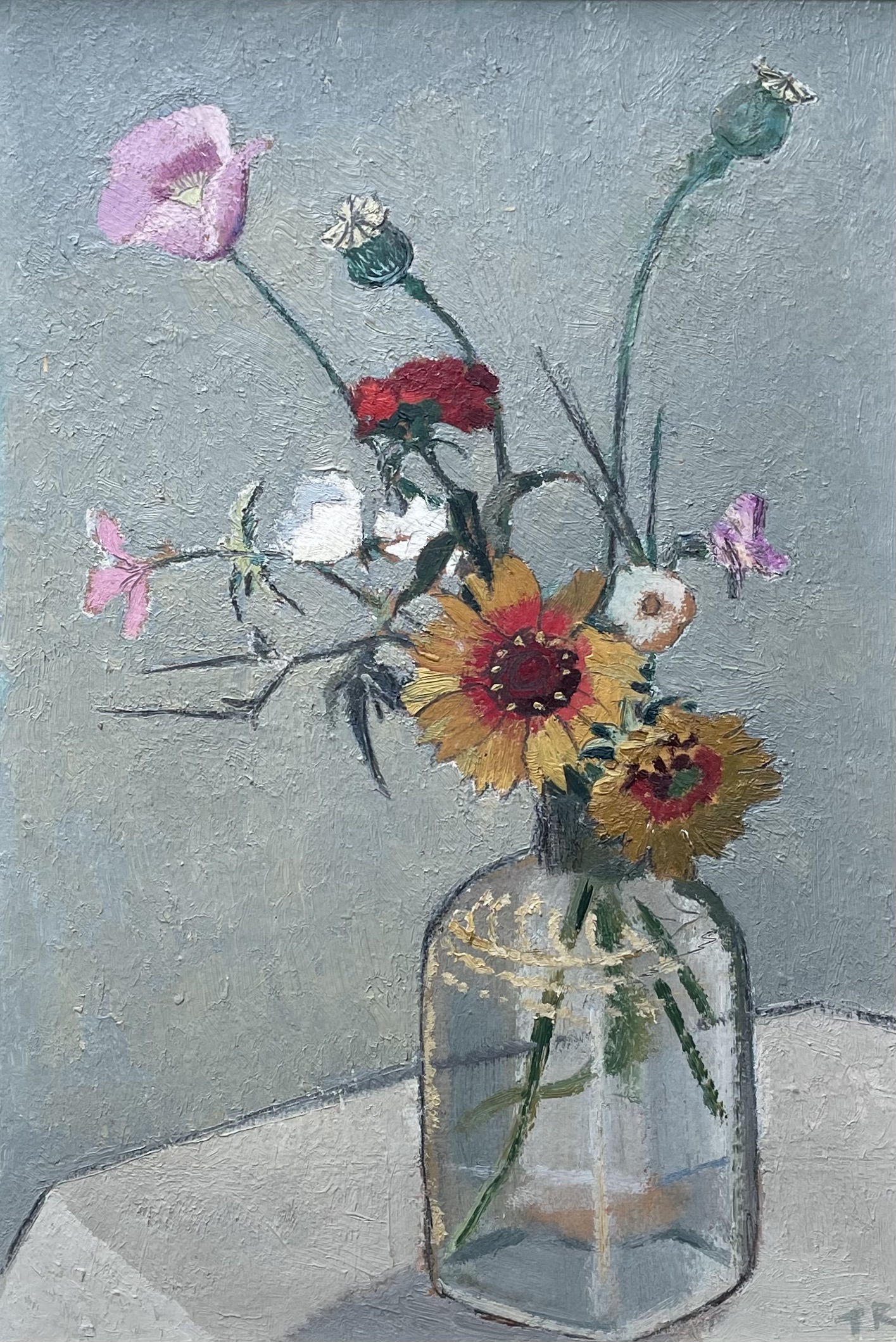
Summer Flowers in a Glass Bottle
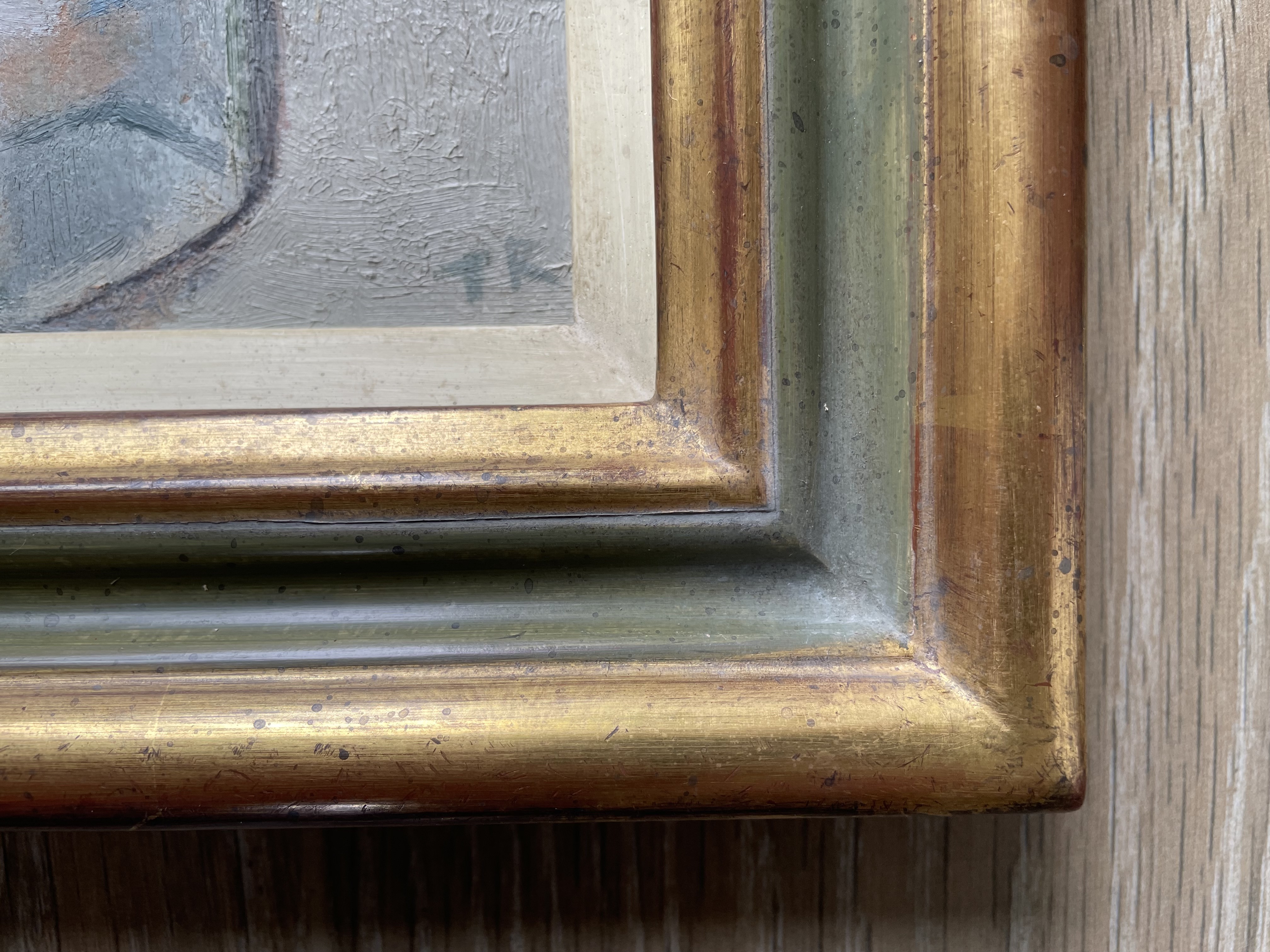
Signed with initials l.r.: TR
Oil on board
Framed
34.5 by 24 cm.; 13 ½ by 9 ½ in.
(frame size 45 by 34 cm., 17 ¾ by 13 ½ in.)
Provenance:
The artist’s family;
Private collection.
Marjorie Tulip Ritchie, known at Trekkie, was born in South Africa in 1902. The family moved to England in 1917 and Trekkie started her studies at the Slade School of Fine Art. In 1926 she married Peter Brooker, a fellow student at the Slade. This marriage was short lived and in 1934 she married Ian Parsons, an editor at Chatto & Windus. Sometime between the wars Trekkie’s sister introduced her to Leonard and Virginia Woolf. After Virginia’s death Leonard and Trekkie formed an unusual relationship and she and her husband moved next door to Leonard Wolf’s house in Victoria Square. She would divide her time between Leonard and her husband often travelling with them separately, acting as hostess to them both and spending a great deal of time with Leonard at Monk’s House in Rodmell, Sussex. When apart, she and Leonard wrote many letters to one another which were published in 1974 as Love Letters: Leonard Woolf and Trekkie Parsons. After his death Leonard left Monk’s House to Trekkie who presented it to the University of Sussex. It is now in the hands of the National Trust and still holds a large collection of her paintings.
As an artist she used and signed with her maiden name: Tulip “Trekkie” Ritchie. She had a great love of flowers which she painted frequently along with portraits, interiors and landscapes. She held several exhibitions of her paintings in Lewes. She illustrated a number of books for both Chatto & Windus and Leonard and Virginia Wolf’s Hogarth Press commissioned her to design dust-jackets and illustrations for Vita Sackville-West’s All Passion Spent (1931); John Hampson’s Saturday Night at the Greyhound (1931) and Norah and William Montgomerie’s Scottish Nursery Rhymes (1946).
RELATED ITEMS




Summer Flowers in a Glass BottleSigned with initials l.r.: TROil on boardFramed34.5 by 24 cm.; 13 ½ by 9 ½ in.(frame size 45 by 34 cm., 17 ¾ by 13 ½ in.)Provenance:The artist’s family;Private collection.Marjorie Tulip Ritchie, known at Trekkie, was born in South Africa in 1902. The family moved to England in 1917 and Trekkie started her studies at the Slade School of Fine Art. In 1926 she married Peter Brooker, a fellow student at the Slade. This marriage was short lived and in 1934 she married Ian Parsons, an editor at Chatto & Windus. Sometime between the wars Trekkie’s sister introduced her to Leonard and Virginia Woolf. After Virginia’s death Leonard and Trekkie formed an unusual relationship and she and her husband moved next door to Leonard Wolf’s house in Victoria Square. She would divide her time between Leonard and her husband often travelling with them separately, acting as hostess to them both and spending a great deal of time with Leonard at Monk’s House in Rodmell, Sussex. When apart, she and Leonard wrote many letters to one another which were published in 1974 as Love Letters: Leonard Woolf and Trekkie Parsons. After his death Leonard left Monk’s House to Trekkie who presented it to the University of Sussex. It is now in the hands of the National Trust and still holds a large collection of her paintings.As an artist she used and signed with her maiden name: Tulip “Trekkie” Ritchie. She had a great love of flowers which she painted frequently along with portraits, interiors and landscapes. She held several exhibitions of her paintings in Lewes. She illustrated a number of books for both Chatto & Windus and Leonard and Virginia Wolf’s Hogarth Press commissioned her to design dust-jackets and illustrations for Vita Sackville-West’s All Passion Spent (1931); John Hampson’s Saturday Night at the Greyhound (1931) and Norah and William Montgomerie’s Scottish Nursery Rhymes (1946).)